
Interoception: Understanding Your Body's Signals and How Occupational Therapy Can Support
You may not know what interoception is, but you use it every day. It’s what tells you that you’re hungry, thirsty, tired, or starting to feel angry, excited, or anxious. Interoception is our ability to recognize and interpret internal body signals, and it plays a key role in how we regulate our emotions and function in daily life.
Children begin learning to recognize these signals at a young age and often require external support to help guide this process. Even as adults, it can sometimes be difficult to notice and interpret our own body signals.
What Does Interoception Look Like in Daily Life?
Interoception allows us to notice what is happening inside our body and respond appropriately. When this sense is working well, we are able to recognize signals such as hunger, thirst, fatigue, and emotional changes, and take action to meet our needs.
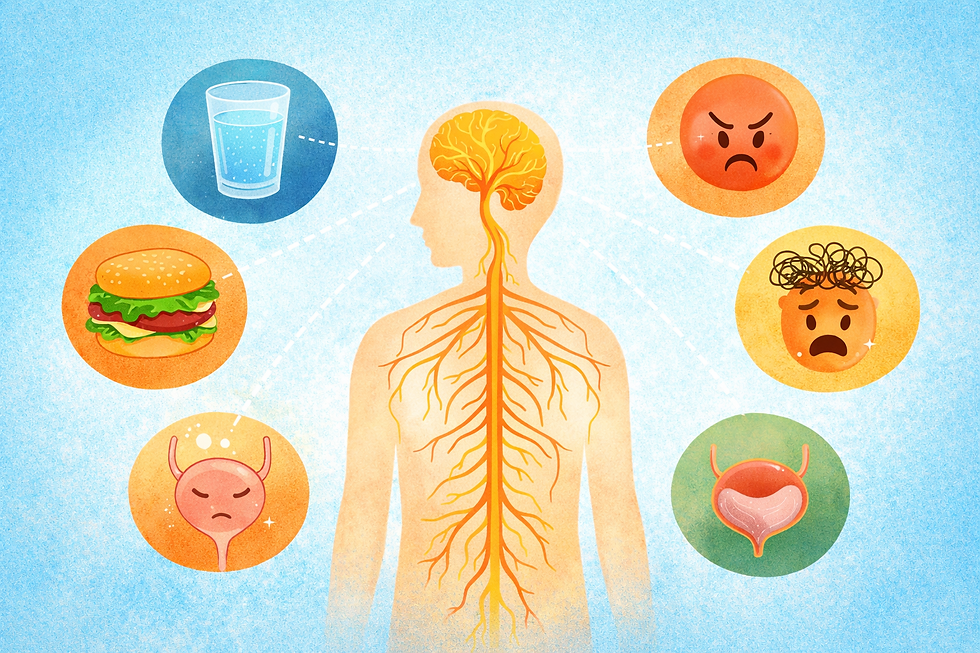
When interoception is more challenging, these signals may be missed, delayed, or misinterpreted. This can impact the ability to regulate emotions, complete daily routines, and respond to your body in a timely way.
Some common signs of interoceptive challenges may include:
Not noticing hunger or thirst
Difficulty recognizing the need to use the bathroom
Becoming overwhelmed or emotional without clear warning signs
Trouble identifying or describing feelings
Appearing unaware of fatigue or pushing past limits
Frequently needing reminders for basic self-care tasks (e.g., eating, drinking, toileting)
Not noticing pain or discomfort
Why Is Interoception Important?
Interoception plays a key role in how we understand and respond to our body’s needs. When we are able to recognize internal signals, we can take action before those needs become overwhelming.
For example, noticing early signs of hunger allows a child to eat before becoming overly irritable, and recognizing feelings of frustration can help a child take a break before reaching a meltdown.
When interoception is more challenging, these signals may go unnoticed until they become intense. This can lead to difficulties with emotional regulation, transitions, and participation in daily activities. A child may appear to have “unexpected” reactions, when in reality, they may not have recognized the earlier signs their body was giving them.
Interoception also plays an important role in:
Emotional awareness and regulation
Establishing routines, for example, eating, sleeping, and toileting
Attention and learning
Developing independence in daily activities
Everyone experiences body signals differently. Understanding these individual patterns is important in order to provide the right support and opportunities for learning. This is where occupational therapy comes in.
How Can Occupational Therapy Support Interoception?
Occupational therapists play an important role in helping individuals develop awareness and understanding of their internal body signals. Rather than focusing only on behaviour, occupational therapy looks at the underlying skills needed to support regulation and participation in daily life.
In OT, support may include:
Building awareness of body signals
Learning to label and describe internal sensations and feelings
Making connections between body signals, emotions and actions
Developing strategies to support regulation and daily routines
Intervention is individualized and may include structured routines, visual supports, body check-ins, and movement or sensory-based strategies to increase awareness and support regulation.
Strategies to Support Interoception at Home
There are simple ways to begin supporting interoception in everyday routines. These strategies can help build awareness and create opportunities for learning:
Body check-ins: Pause throughout the day to ask questions like “Are you hungry?”, “Do you need a break?”, or “How is your body feeling?”
Use of scales: Rating hunger, energy, or emotions can help make internal signals more concrete.
Link sensations to actions: Help connect body signals to what to do next, for example: “Your stomach is growling, that means it’s time to eat.”
Establish routines: Regular schedules for meals, hydration, and sleep can support consistency, especially when internal cues are harder to notice.
Modeling and language: As a caregiver, talk aloud about your own body signals and how you respond to them. This helps children notice their own sensations and learn strategies for responding.
Who can benefit from Interoception Support?
Although interoception is often discussed in relation to children, the skills involved are important for people of all ages. Teens and adults can also struggle to notice internal signals, such as hunger, fatigue, or rising stress, and may not always recognize how these sensations affect their emotions or actions.
Supporting interoception at any age can help individuals respond more effectively to their body’s needs, improve emotional regulation, and increase independence in daily activities. Whether it’s a child learning to recognize when they’re overwhelmed at school, a teenager noticing early signs of stress, or an adult realizing they need a break before burnout, interoception strategies can be adapted to fit each person’s needs and lifestyle.
Interoception is a foundational skill that supports how we feel, respond, and function in our daily lives. While it may not always be visible, it plays a significant role in emotional regulation, routines, and overall independence.
With the right support, individuals can learn to better understand their body’s signals and respond in a way that supports their well-being and participation in daily activities.


Comments